The barriers preventing success: what learners at Hands On schools actually face
"he wanted to be an engineer, but today he is a drunkard. People who had dreams, but today are not where they want to be. So now they have a thing of projecting what happened to them into you."
A learner at LEAP 2 Crossroads, describing the people she grew up around.
The hardest barrier facing learners in Crossroads and Langa isn't equipment. It isn't tuition. It isn't even the absence of technical training, although that matters too. It's the active discouragement of bigger ambitions by adults whose own ambitions were broken, and the silence after matric where guidance should be. Hands On built technical faculties directly inside mainstream high schools, with mentors present every week of the academic year, because the barriers our learners face cannot be answered by access alone. They have to be answered by someone in the building who keeps showing up.
This piece names four of those barriers in the words of the learners who carry them. It then sets out what we built to push back, and the national context that makes the work urgent.
The barriers, in the learners' words
The first is the absence of guidance. "I had lack of motivation and the lack of guidance in terms of when I finished school and high school. Where do I go from there?" That sentence isn't unusual. In Q1 2025, Stats SA found that 58.7% of unemployed young South Africans had never held a previous job. Six in ten waiting for the first opportunity to enter the labour market, with no clear route to it. Matric ends, and then nothing.
The second is the community pressure that pulls ambition down. "They project their fears. People project what they fear they faced into us." When an older generation has watched its own ambitions break for structural reasons rather than personal ones, the protective instinct is to pre-empt the same outcome in the next generation. Learners who describe wanting to be a structural engineer, or wanting to start a company, are told to "be real" and "stick to reality". They're told they think too much of themselves. The discouragement is rarely cruel. It is almost always loving. That is what makes it so hard to push back against.
The third is the normalisation of paths that lead nowhere. "Alcohol is a thing in this community. So if I drink alcohol, there won't be a big deal because everybody is also doing it." The everyday environment makes the off-ramp look ordinary. The on-ramp to a trade or a degree, by contrast, has no normal in it.
The fourth is the geography of access. Until the technical faculty at LEAP 2 Crossroads existed, learners who wanted a route into electrical, plumbing, or mechanical trades had to leave their community to find it. Transport costs, time away from family responsibilities, and being the only person on your block making the trip. Asking a 16-year-old to do all three alone, while their community tells them they're being unrealistic, is most of the reason most don't.
The bigger picture
These numbers are public, current, and trending the wrong way. Stats SA's Q1 2026 figures put youth unemployment (ages 15–34) at 45.8%, with the 15–24 cohort sitting at 60.9%. The NEET rate (not in employment, education, or training) for the 15–34 group reached 45.6%. The economy shed 258,000 jobs held by young people in a single quarter.
Against that, the artisan economy is still hiring. A Department of Higher Education and Training tracer study found that 81% of those who completed artisan apprenticeships were employed afterwards. The National Development Plan target is 30,000 new artisans qualifying every year by 2030. The most recent annual figure is closer to 20,000. The country is short, the jobs exist, and the route is open. The bottleneck is everything that happens before a learner gets onto the apprenticeship.
That bottleneck is what Hands On exists to dismantle.
What changes inside a Hands On school
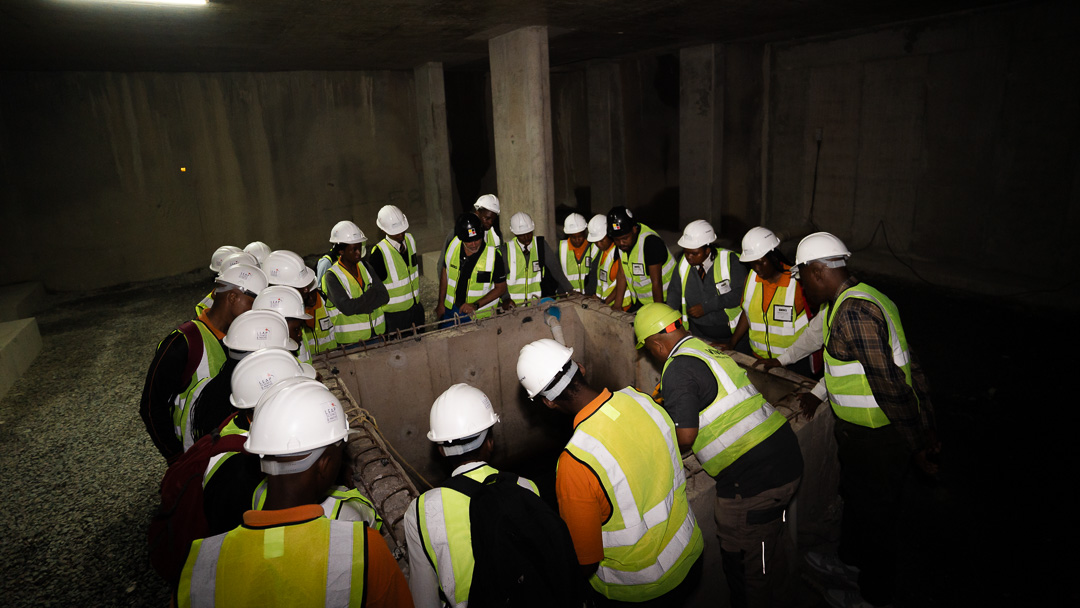
We built our technical faculties inside mainstream high schools, not in standalone training centres next door or across town, for a specific reason. An after-school programme leaves a learner in their community as the one who's chosen to be different. An on-campus faculty, sitting on the same timetable as maths and English, makes the technical path ordinary. The Grade 10 isn't an exception. She has a workshop class on Tuesday.
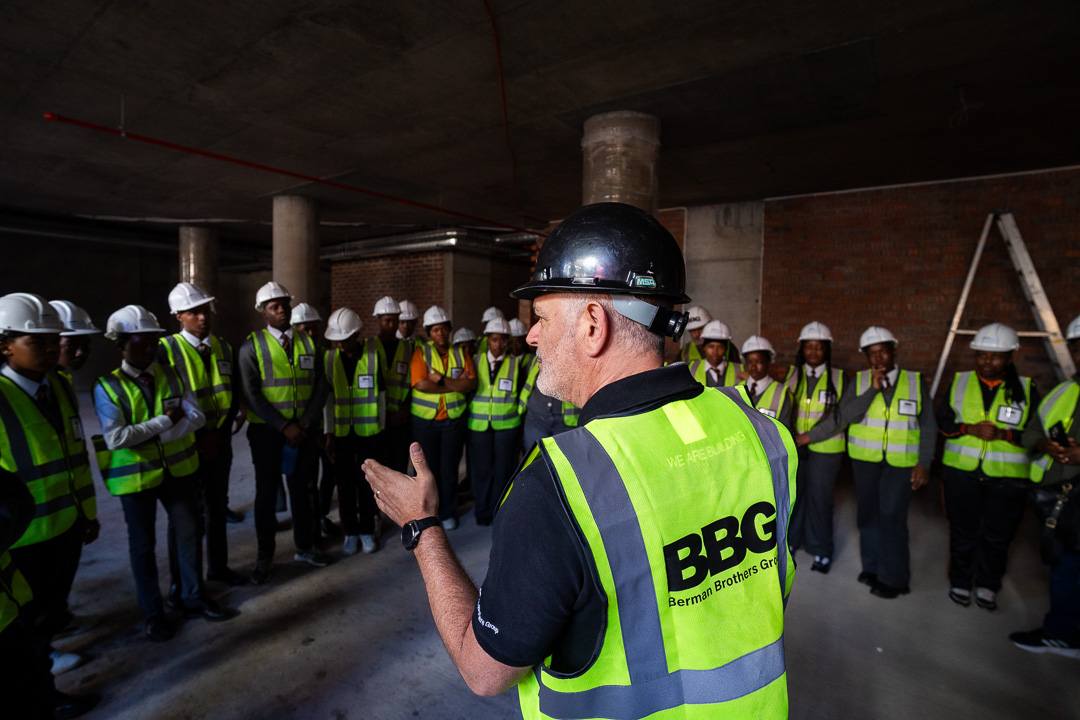
Three things follow from that choice. First, location: the workshop is on the same campus as the classrooms, so there is no transport cost, no separate enrolment, and no decision to "be the one" who does the technical track. Second, integration: technical training sits alongside academic subjects on the timetable, which dismantles the assumption that trade-track and academic-track are separate futures for different learners. Third, mentorship: every learner has adults in the building, every week, who treat their ambition as routine. That is the load-bearing element. The rest follows from it.
Back to the learner
The same learner who described the projected fears of the community also described what carries him through them. "I can wake up and feel like I don't want to do anything, demotivated, but I keep pushing because I know that there are people around me who believe in what I want to be."
That sentence is the entire case for in-school mentorship in a single line.
How to support this
If you'd like to be one of those people, the most useful thing you can do this month is fund a learner's year of technical training at LEAP 2 Crossroads or LEAP 1 Langa. Visit thehandsonfoundation.org to give, or write to management@thehandsonfoundation.org to talk about partnership.
Sources: Quarterly Labour Force Survey Q1 2026, Statistics South Africa. "Supply and Demand of Artisans in South Africa", Department of Higher Education & Training (National Skills Fund), 2022. National Development Plan 2030. Quotes drawn from learner interviews conducted at LEAP 2 Crossroads, 2026.
Let’s Build a Future Together
Education is the most powerful tool to break cycles of poverty and inequality. By supporting The Hands On Foundation, you are investing in real skills, real opportunity and real transformation.