What a construction site teaches that a classroom can't
In grade 9, every South African learner makes one of the biggest decisions of their life: subject choice. The subjects they carry into grade 10 decide which matric they write, which courses will accept them, and which careers stay open. One of the learners in our engineering faculty put the problem better than any policy document has: "In grade 9, when you are doing subject choice, how can you know what to choose if you don't know who you want to be?"
Most learners answer that question blind. They choose from a subject list, a timetable, and whatever advice is within reach. Very few have stood inside the work those subjects lead to. Our technical faculties close half of that gap: qualified artisans teaching construction and digital electronics inside the ordinary school day. The film below is about the other half.
A faculty teaches the skill. A site shows the career.
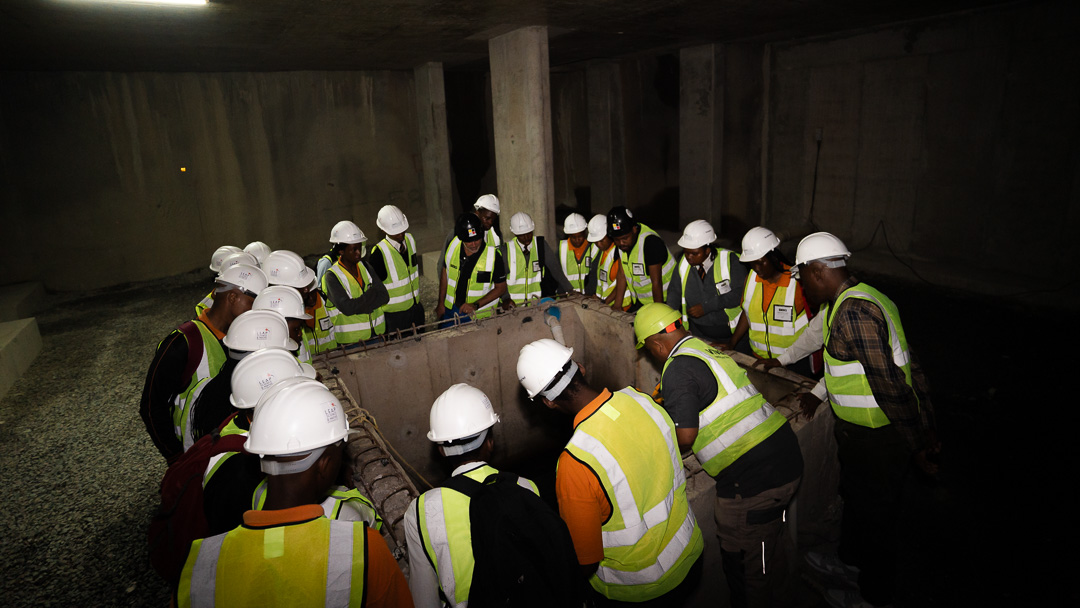
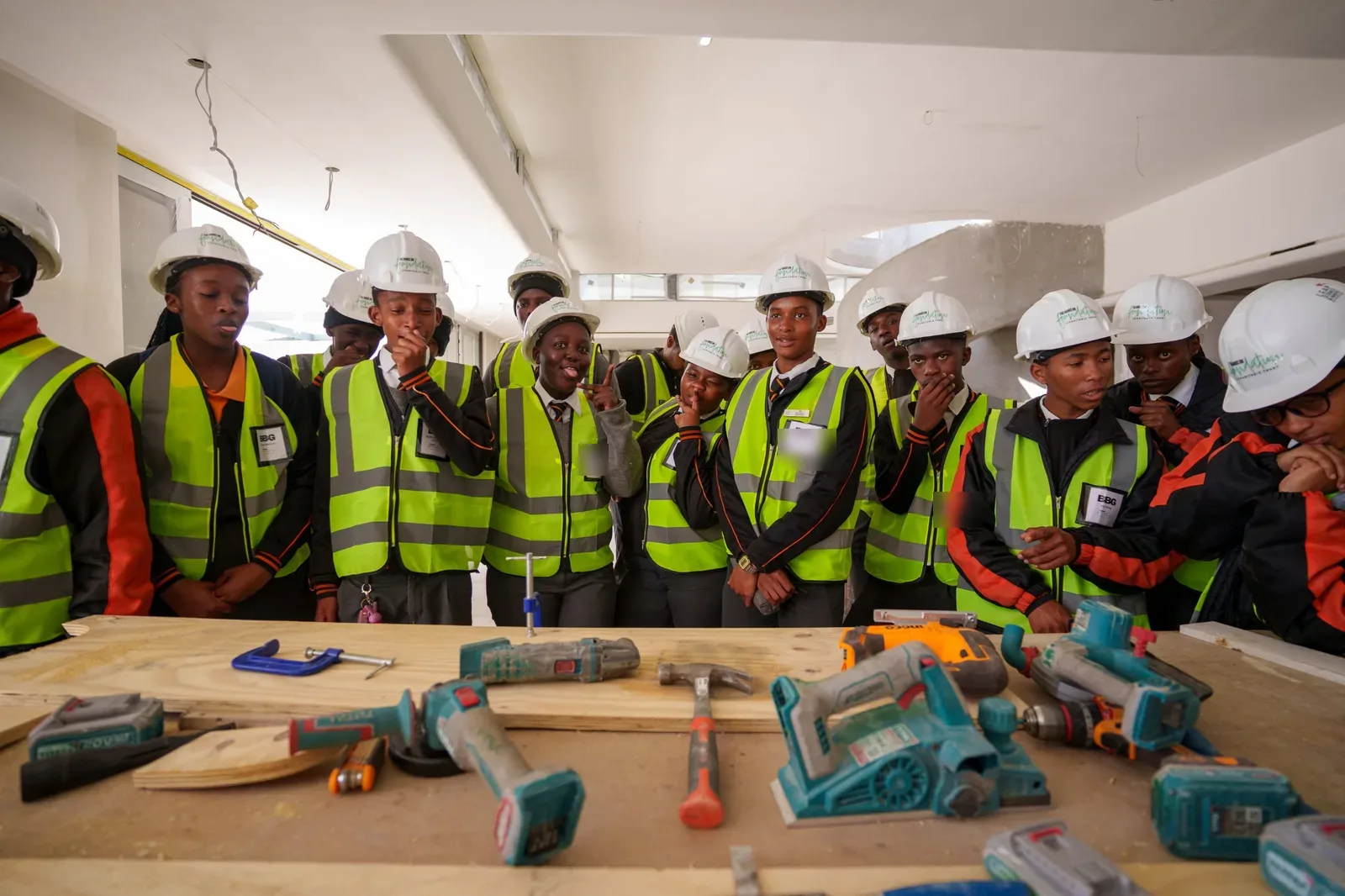
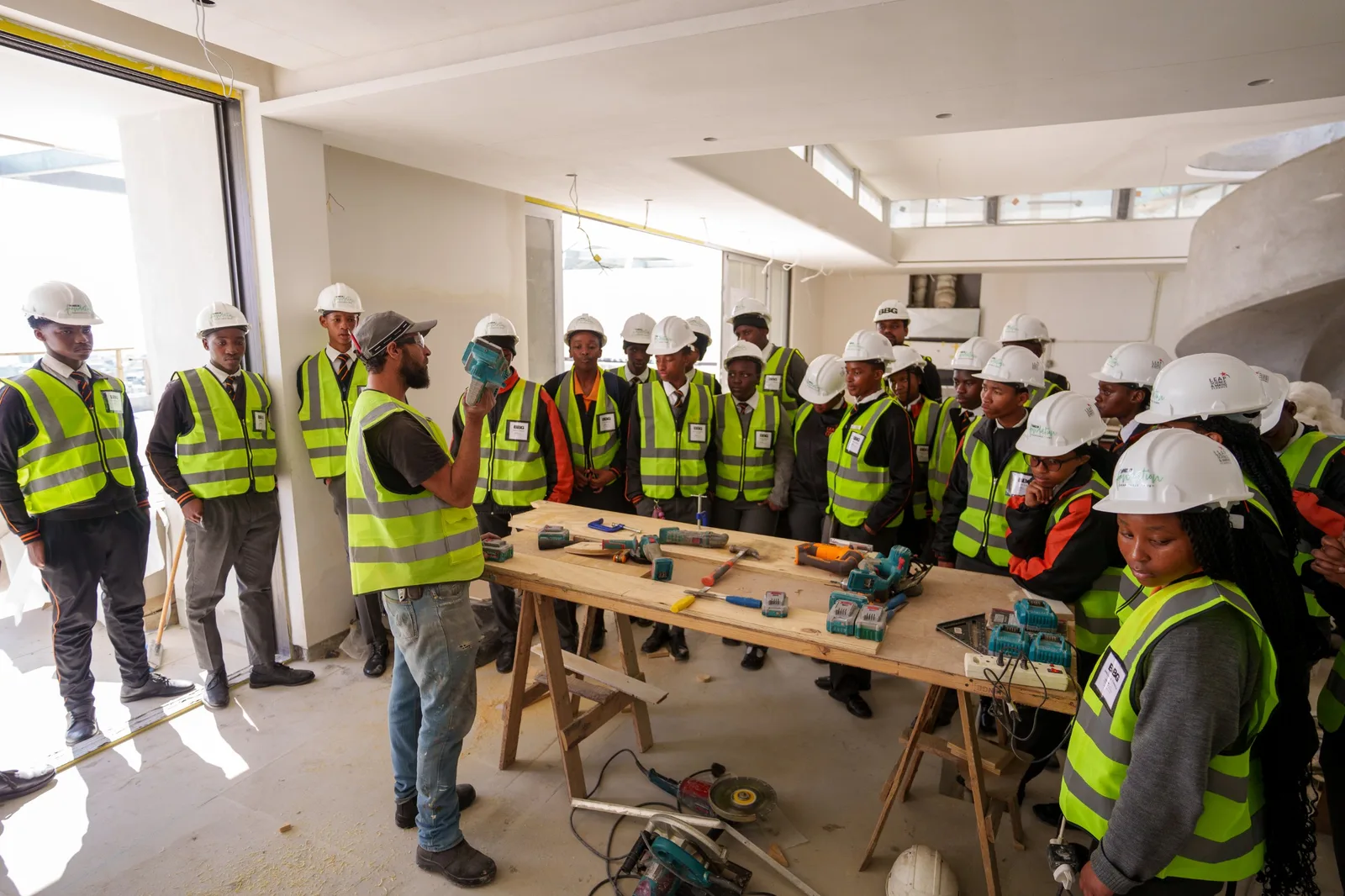
We have built technical faculties inside three mainstream high schools: Wynberg Boys High, LEAP 1 Langa, and LEAP 2 Crossroads. That answers access. The tools, the teaching, the practice, all of it inside the school day. But a career is hard to want if you have never seen it. So at the end of August, 52 learners from LEAP 2 Crossroads spent a morning on working construction sites in Sea Point, walking a live building with the engineers, site managers, and artisans who run it.
"Basically what they do here, but on an advanced level"
The first thing a site teaches is recognition. The drawing on a classroom desk in Crossroads is the same drawing pinned up in the site office. The difference is that on site, it is becoming ten storeys of poured concrete. "Everything that we are taught in class, it's basically what they do here, but on an advanced level," said one learner, standing where the two versions meet. That sentence is the whole argument for taking the classroom to the site. The subjects stop being abstract the moment a learner can point at the thing they describe.
Direction is taught by seeing
"It's good to give chance to the students to see what they're learning in class, to see it in reality," says Patricia, who works with the learners on the Hands On side. The second thing a site teaches is direction, and the film carries the evidence. One learner arrived unsure about engineering: "Now that I attended this outing, I feel so motivated." Another put it in longer terms: "I think I needed that direction in my life, because sometimes I wonder what I want to become, and somewhere along the way I got lost. But now I think I know."
A morning cannot hand anyone a career. What it can do is let a sixteen-year-old test an imagined future against a real one. For some, that test confirms a direction. For others, it replaces drifting with a decision. Both are worth a morning.
Why it sticks
"Once you've read something, you will remember it. But once you've done something, you'll never forget it." A learner said that on the way out, and it is also the entire logic of technical education. Skills of the hands are learned by doing, and careers of the hands are chosen by seeing. The route beyond the choice is real: the Department of Higher Education and Training's tracer studies show that 81% of those who complete artisan apprenticeships are employed afterwards. What learners need is to see where the route starts.
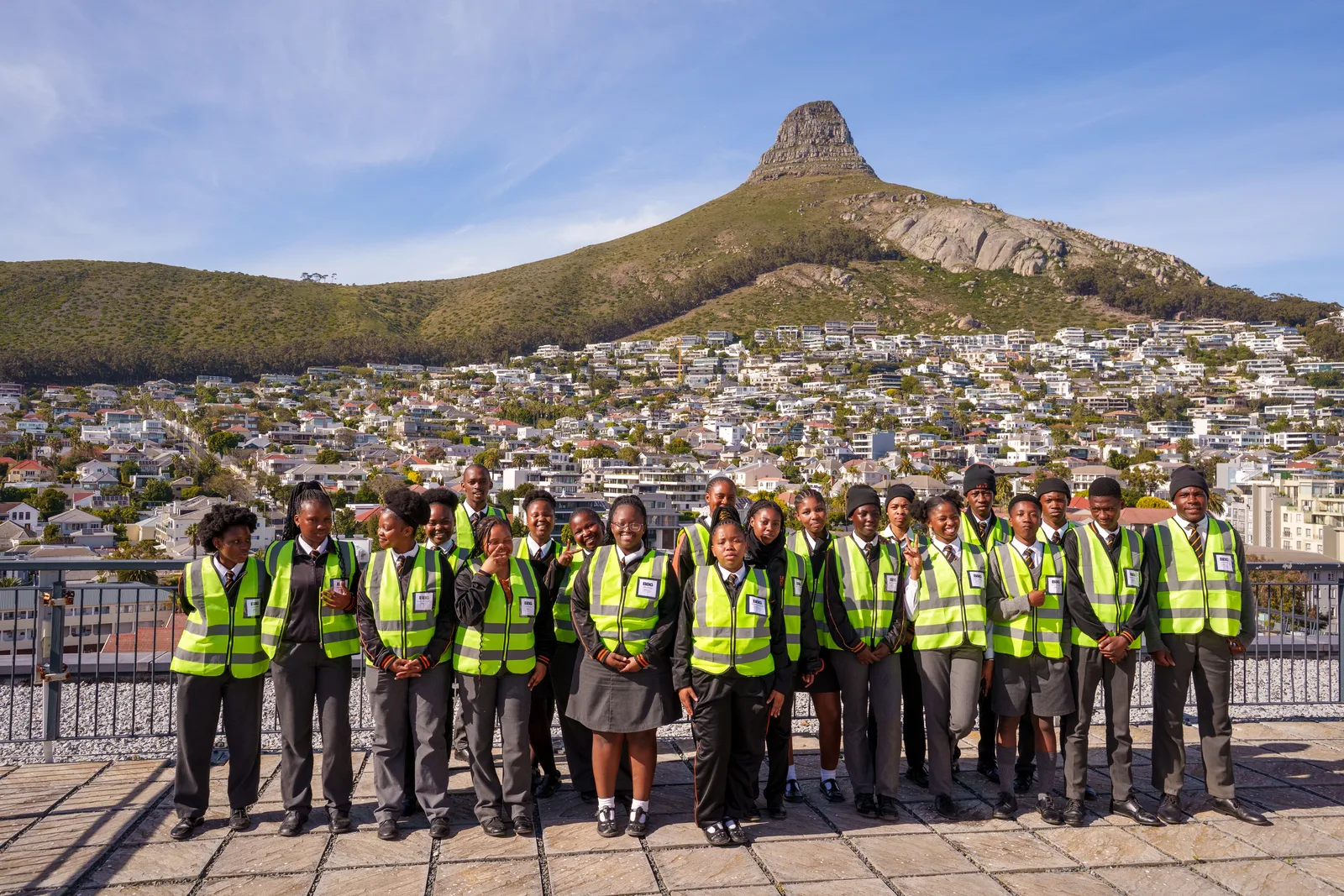
"One day this will be me"
The film ends the way the morning did, with a group of learners on the roof of a building site, looking out over the city. One of them said what the whole visit was for: "You go home and you have that vision: that one day, this will be me."
That is what a construction site teaches that a classroom can't. Not the skill. Our faculties teach that every day. The sight of yourself in the work.
The future is in our hands.
Help a learner see the work
If you would like to support a learner's technical education, visit thehandsonfoundation.org/donate. For corporate partnerships, write to management@thehandsonfoundation.org.
Sources: "Supply and Demand of Artisans in South Africa", Department of Higher Education & Training (National Skills Fund), 2022.
Let's Build a Future Together
Education is the most powerful tool to break cycles of poverty and inequality. By supporting The Hands On Foundation, you are investing in real skills, real opportunity and real transformation.